The facts are well known. Behind the disproportionate representation and racist treatment of Indigenous people in the criminal justice system lie the historical and ongoing wrongs of colonization.
This has involved the active suppression of Indigenous cultures and traditions, including attempts to erase Indigenous legal orders. Against this backdrop, Indigenous Allard Law grads are working with Elders and communities to decolonize Canadian legal structures and revitalize Indigenous legal traditions in ways that have a direct impact on Indigenous people’s lives.
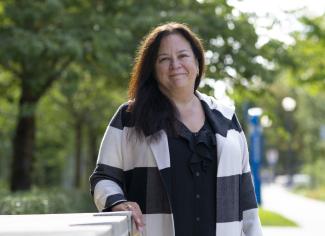
For trailblazing Allard Law graduate Dr. Judith Sayers, CM (LLB ’81), President of the Nuu-chah-nulth Tribal Council and Chancellor of Vancouver Island University, Indigenous self-determination is the key to justice for Indigenous peoples. “We have to put our own governing systems in place,” says Sayers, who is also a director of the BC First Nations Justice Council (BCFNJC) and the organization’s lead on policing, oversight and accountability. “Decolonizing doesn’t mean duplicating the system as it now is. We just can’t replicate a system that has never worked for us,” adds Sayers, who still keenly recalls the racism she experienced as a young lawyer in the 1980s from colleagues and judges.
The existing system doesn’t work due to two main factors, says Sayers: paternalistic governments and stare decisis, the legal doctrine of precedent. Court decisions involving Indigenous people must follow established legal decisions that are based “on values that aren’t ours,” she says. The solution is for First Nations to “put their own processes in place.”
As of 2021, Indigenous people account for around five percent of Canada’s population, but Indigenous men and women constitute 32 and 50 percent of federal prison populations, respectively. Sayers emphasizes that the bleak incarceration statistics are rooted in “the Indian Act, racism, poverty and the post-trauma of residential schools.” The social determinants contributing to incarceration are linked with people’s efforts to deal with deep-seated grief and trauma created by the effects of colonization, she says.
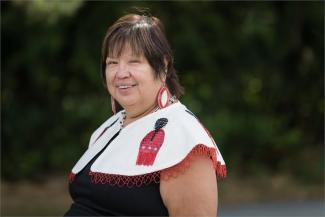
Established a decade ago, the BCFNJC is one organization advancing Indigenous-led transformation. The BCFNJC focuses on two main tracks. The first seeks to decolonize Canada’s justice system, while the second focuses on the restoration of Indigenous legal orders and structures, says Allard Law alum and BCFNJC Chair Kory Wilson (LLB ’99), who is also Executive Director of Indigenous Initiatives and Partnerships at the British Columbia Institute of Technology.
As Wilson explains, one new initiative aimed at decolonizing the justice system is the BCFNJC’s Indigenous Justice Centres (IJCs), which work to reduce the overrepresentation of Indigenous peoples in the justice and child welfare systems and make it easier to find culturally appropriate and safe support. Each of the 15 centres, including a virtual centre, provides free legal representation to Indigenous people, as well as connections to holistic support — such as referrals for housing and mental health services — in their own communities. “The IJCs support Indigenous people to remain connected to their community,” adds Wilson.
In addition, the creation of a police accountability unit, primarily focused on helping educate and train new members of the Surrey Police Service, aims to help overcome systemic racism and discrimination in the system, Wilson says.
Like Sayers, Wilson emphasizes that systemic reform requires more than just changes to the criminal justice system. It also means tackling the underlying factors that place Indigenous people at risk and ultimately increase their interactions with the justice system. “You have to ask, why are they in that situation? Are there mental health issues? Are there learning disabilities or poverty? A lot of it comes down to poverty and being unhoused,” she says. She names three social factors that disproportionately affect Indigenous people: the housing crisis, the toxic drugs crisis, and involvement in the child welfare system. Addressing these factors, she says, will carve a path towards justice for Indigenous peoples.
Alongside the IJCs, in July 2025 the BCFNJC opened its first Indigenous Diversion Centre — also the first of its kind in Canada — in Prince George. The Centre redirects Indigenous people out of the criminal justice system by emphasizing accountability, healing and support within one’s own community and cultural traditions. An important part of its work is addressing the root causes that determine whether individuals do or do not become involved with the criminal justice system, says Wilson.
The BCFNJC’s Community-Based Justice Fund provides direct support to First Nations communities to “develop their own nation-based justice plans,” Wilson says. The fund is focused on helping First Nations “reinvigorate and re-establish their own systems of justice and laws,” revitalizing, supporting and reinforcing the “traditions and Indigenous legal orders that all of the First Nations in British Columbia have had since time immemorial.” The BCFNJC not only distributes funds but works together with communities to establish initiatives like a Knowledge Keepers Council, comprised of Elders and other individuals who can provide traditional wisdom and cultural guidance, including advice on Indigenous law.

The Native Courtworker and Counselling Association of BC (NCCABC) is another organization working to decolonize the criminal justice system. It was co-founded in 1973 by Hereditary Chief Bill Wilson (LLB ’73), Hemas Kla-Lee-Lee-Kla, the second Indigenous graduate of Allard Law and the father of Kory Wilson and the Honourable Jody Wilson-Raybould, KC (LLB ’99). Chief Wilson, who passed away in January 2025, was a lifelong advocate for equitable, culturally sensitive legal services for Indigenous people. When working to secure funds to establish the NCCABC while still in law school, he found that “there was no awareness or any interest here from provincial government” in addressing the systemic issues impacting Indigenous peoples, as he explained in an interview for Allard Law’s history project in 2023.
Fifty years later, the NCCABC now has a presence in approximately 70 percent of BC courthouses, says the organization’s president, Jacob Caouette (JD ’24), a recent Allard Law grad. Caouette would like to see the NCCABC active in all provincial courts, but says the organization is stymied by a lack of funds.
The NCCABC works within the court system to serve on average 6,600 Indigenous people annually, providing culturally appropriate legal services that incorporate Indigenous ways of knowing and being into the criminal justice system. The NCCABC’s courtworkers, all of whom are Indigenous, facilitate obtaining counsel, which can be challenging in remote areas. They also advocate for Indigenous people in a system where they are more likely to receive a custodial sentence and less likely to receive bail than non-Indigenous people, Caouette says.
In addition, NCCABC programs look to address the social determinants of overincarceration by providing mental health and addiction counselling, doing family preservation work and engaging in advocacy for Indigenous youth. Such programs can factor into Gladue reports, which highlight the specific circumstances and systemic factors that may have influenced an Indigenous person’s involvement with the criminal justice system, significantly reducing sentence lengths and influencing bail conditions, says Caouette.
Caouette relates the story of an NCCABC staff member working with a man who failed to show up to his court appearance. The courtworker asked the judge to delay issuing an arrest warrant while he located the man at home and brought him to court. “This points out the value of the court-worker and how we’re able to alleviate a bit of the suffering and make the system more efficient,” says Caouette.

In the colonial context of Canada’s legal institutions, however, the path to genuine justice is through systemic change. Allard Law alum Jessica Buffalo (JD ’16), Academic Director at the Indigenous Community Legal Clinic and an assistant professor at Allard Law, says the Indigenization of law can look similar to peacemaking. It focuses on restorative justice, whereby, for example, an Elder or traditional knowledge keeper might bring a person whose actions have caused harm together with the person harmed. “There’s a ceremonial aspect to it,” says Buffalo. “It’s a taking of responsibility and accountability, which is meaningful to the Indigenous participant.”
A restorative approach can also involve developing and implementing a healing plan, an important tool for addressing trauma and fostering cultural resurgence — supporting self-determination and community connection, as well as connection to the land. For instance, Elders, traditional knowledge keepers and cultural counsellors might accompany an individual into a purifying sweat lodge for spiritual healing. One demonstrated positive outcome is reduced repeat involvement with the criminal justice system, says Buffalo.
Buffalo adds that all practising lawyers should have a thorough grounding in the Gladue principles and factors, which are restorative in nature and “take into consideration what brought them before the judge — including looking at the history and legacy of things like residential school, the Sixties Scoop, the Indian Act and how that impacted them.”
Imprisonment statistics are a clear indicator that Gladue factors and Indigenous identity aren’t being taken into consideration in the courts, says Buffalo. “When I was duty counsel and working in the Calgary Indigenous Courts [which opened in 2019], this was something that I saw all the time: counsel did not know what Gladue factors are,” she says. “They didn’t know how to obtain them and put them in front of the court properly and their client suffered as a result.” Buffalo adds that the situation hasn’t improved, highlighting the need for a solid grounding in Gladue factors in law schools. “Where the Gladue factors are taken into consideration and resources are provided, people are able to get their lives back.”
Decolonization and Indigenization are ongoing, and success will depend on the next generation of Indigenous lawyers and judges who will carry on the work of systemic reform and the renewal of Indigenous legal traditions. “This work is heavy,” says Buffalo, “but steps are being made. We just have to keep pushing because it is valuable and will benefit all Canadians at the end of the day.”
This article was original published in the 2025 issue of the Allard School of Law's Alumni Magazine.