Event Description
In this session, UBC faculty from diverse disciplines will explore the role that academia can play in supporting the objectives of COP by breaking down internal and external barriers to advance climate solutions. From clean energy advancements to legal commitments to climate action; from advancing adaptation and mitigation research across disciplines to decreasing polarization, speakers will discuss how they may use their role as researchers to drive climate solutions. The audience will be able to participate through a question-and-answer period, followed by an opportunity for continued informal discussion at the end of the event.
The Conference of the Parties (COP) to the UN Framework Convention on Climate Change Conference brings together world leaders, policy experts, non-governmental organizations, and civil society to discuss climate action. These gatherings provide the opportunity for governments to officially negotiate international agreements, take stock of global progress on implementation, and present national climate plans. Civil society, including academia, plays an important role at COP, holding parties accountable for their commitments and working to advance climate solutions.
Moderator
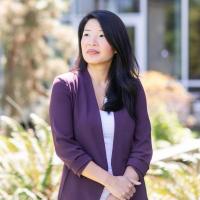
Carol Liao is an Associate Professor at Allard Law and a Distinguished Fellow of the Peter P. Dhillon Centre for Business Ethics at the UBC Sauder School of Business. Her research focuses on corporate law and sustainability, climate governance, and social justice. She is the Co-Director (Academic) of the UBC Centre for Climate Justice and the Chair and Principal Co-Investigator of the Canada Climate Law Initiative, dedicated to advancing director knowledge on the latest in climate risks and fiduciary obligations. She is also Principal Investigator of a SSHRC Insight Grant-funded empirical study on sustainable corporate governance and a UBC research excellence cluster member of the Future Minerals Initiative and Decision Insights for Business & Society. In 2024, she was recognized with the UBC Public Engagement Award for her communication of corporate governance, ESG, and equity issues. She was a member of UBC's delegation for COP29 hosted in Baku, Azerbaijan.
Speakers
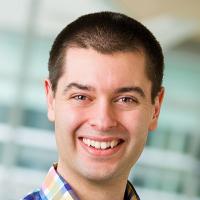
Robert Godin leads the SolarSpec: Solar Energy Conversion and Spectroscopy group where his research focusses on sustainable energy production, organic semiconductors, and photocatalysis. He teaches in the Department of Chemistry at UBC's Okanagan campus and is the Green Chemistry lead in the Bachelor of Sustainability Program. Since 2023, he has also acted as the Co-lead of the Solar Energy for Net Zero Research Cluster, a multidisciplinary group of researchers at both UBC campuses working collaboratively to advance our understanding of harnessing, converting, storing and using solar energy with the aim to accelerate vast deployment. He has been an active member of UBC’s Climate Research Working group and has been a Steering Committee member of the pan-university Climate Solutions Research Collective since its launch in 2023. In 2021 Robert was a part of UBC's delegation to COP26 in Glasgow, Scotland.
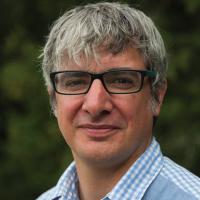
Hisham Zerriffi is a Professor in Forest Resources Management in the Faculty of Forestry, and the Associate Dean, Equity, Diversity and Inclusion. He is the Principal Investigator of the Energy Resources, Development and Environment Lab which uses inter-disciplinary approaches to research problems at the intersection of technology, environment and development with the aim of tackling major issues in this area and developing evidence-based policy recommendations for all stakeholders (e.g. governments at all levels, households, private sector, donors, etc.). His research often explores questions around tradeoffs and decisions that have to be made that balance short and long-term development and environmental goals. He is a Faculty Associate of the Institute of Resources, Environment and Sustainability, the Clean Energy Research Centre and the BioProducts Institute at UBC.
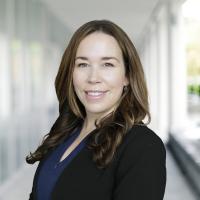
Katherine White is a Professor of Marketing and Behavioural Science and is the Senior Associate Dean, Strategy and Responsible Business at UBC Sauder. She is also the Academic Director of the Centre for Climate and Business Solutions, a dynamic hub for problem-driven research and climate-focused business education. Her research focuses on how social contexts, identities, and emotions shape how consumers make ethical, prosocial, and sustainable choices. Kate is the author of “The Elusive Green Consumer” in Harvard Business Review and she has published over 60 research articles. She was awarded a Canada Clean 50 Award for thought leadership in sustainability and the American Marketing Association’s Award for Responsible Research in Marketing.
This event is part of Climate Emergency Week at UBC.

- External Organization
- General Public
- All Students
- Alumni
- Faculty
- Graduate Students
- JD
- Staff
- Research Talks
